
Minimally invasive surgery
Minimally invasive spine surgery: what it is and when it can be considered
Minimally invasive techniques have changed how the spine is operated on. Knowing how they work helps you understand your options and answers common questions.
 Dr. Julián Carrillo GonzálezNeurosurgeon. August 14, 2026, 7 min read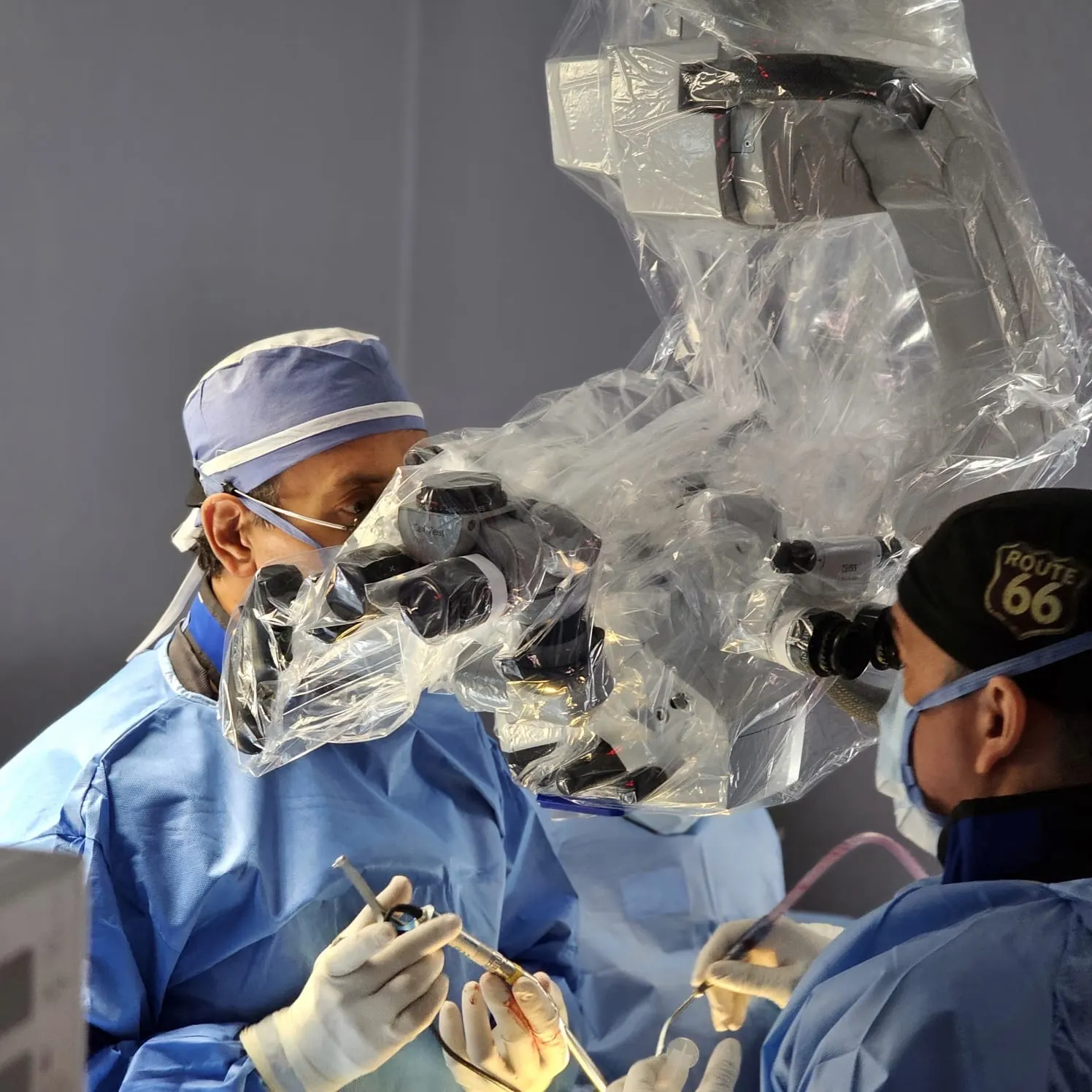
When people hear "spine surgery," they picture a large incision and months of recovery. Today, many procedures are done with minimally invasive techniques.
What is minimally invasive spine surgery?
It is a group of techniques that reach the affected area through small incisions, separating the muscles instead of cutting them, with magnification systems that allow precise work. The goal is the same as in open surgery, decompressing a nerve, removing a disc fragment or stabilizing the spine; what changes is the path to get there.
What are the advantages?
Because it spares the muscles and tissues more, there is usually:
- Less bleeding.
- Less incision pain in the following days.
- Earlier mobilization and a shorter hospital stay.
Timelines vary with the type of surgery and each patient.
Which problems can be operated on this way?
Some lumbar and cervical herniated discs that did not improve with conservative treatment, certain stenoses that need decompression, some one- or two-level fusions and procedures on vertebral fractures. The indication depends on the anatomy, the number of levels and the specific problem.
Is every patient a candidate?
No. Extensive deformities, problems at many levels or previous surgeries with significant changes can make conventional surgery the better option. The technique is chosen according to what each patient needs.
Does minimally invasive mean risk-free?
No. It requires specific training, detailed planning and technology in the operating room, and like any surgery it has risks that should be discussed calmly before deciding.
How is it decided whether my case can be operated on this way?
With a complete evaluation: medical history, neurological exam and a detailed review of your imaging. That defines whether surgery is indicated and which approach is best for you.
Is surgery the first step?
For most spine problems, no. Many patients improve with conservative treatment, rehabilitation and pain control. Surgery is considered when that does not work, when there is neurological involvement or when the limitation in your daily life is significant.
In summary
Knowing that less aggressive techniques exist helps you make decisions with less fear and more information, together with your neurosurgeon.
This article is for information only and does not replace a medical visit. If you have warning signs, go to the emergency room.