
Subdural hematoma
Chronic subdural hematoma: when a minor blow shows up weeks later
Confusion, personality changes or weakness on one side in an older adult can come from a blow weeks earlier. It is a treatable condition worth recognizing.
 Dr. Julián Carrillo GonzálezNeurosurgeon. August 22, 2026, 7 min read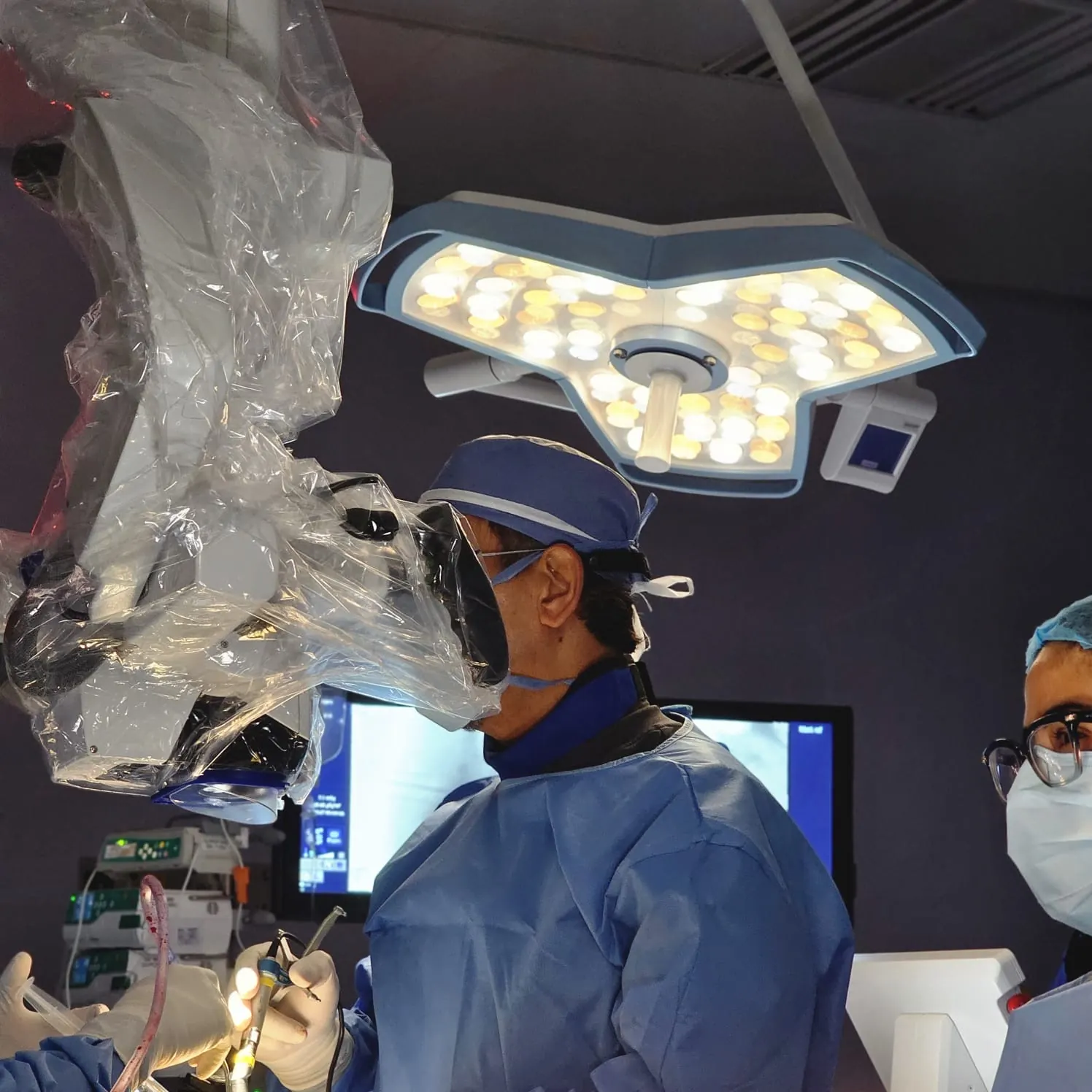
An older adult who within a few weeks becomes confused, slower or starts falling is not always just "getting older." Sometimes the cause is a chronic subdural hematoma, a treatable condition.
What is a chronic subdural hematoma?
It is a collection of blood that forms little by little between the brain and the membranes that cover it. What delays the diagnosis is that symptoms can appear several weeks after the blow that caused it, when nobody remembers it anymore.
Why is it more common in older adults?
With age, the brain shrinks slightly and the veins that connect it to its membranes are stretched tighter. A blow that would have no consequences in a young person can cause slow, progressive bleeding in an older adult. The blow can be minimal: a fall without fainting, bumping into a door frame or braking hard in the car. In many cases it is never even identified.
Who is at higher risk?
People who take anticoagulants or antiplatelet drugs (medications to "thin the blood") and people with clotting problems. For them, any blow to the head deserves attention, even if it seems minor.
What are the symptoms?
They appear gradually and are mistaken for age:
- A headache that does not ease the way it used to.
- Confusion, slow responses, drowsiness or memory lapses.
- Changes in character: the family finds the person different or withdrawn.
- Trouble walking, loss of balance or repeated falls.
- Weakness on one side of the body, or changes in speech or vision.
When the symptoms affect only one side of the body, the suspicion increases greatly.
How is it different from dementia?
By the speed: the changes appear over weeks, not years. If there was also a recent blow or the person takes anticoagulants, a structural cause must be ruled out.
How is it diagnosed and treated?
With quick, accessible brain imaging that confirms the hematoma and shows its size. If it is small and does not cause significant symptoms, it can be monitored with imaging. If it is large or causes symptoms, surgical drainage relieves the pressure on the brain, and many patients improve markedly in alertness and function.
In summary
Progressive confusion, personality changes, weakness on one side or frequent falls in an older adult, especially after a blow or while on anticoagulants, deserve a neurosurgical evaluation. Sometimes what looks like age has a solution.
This article is for information only and does not replace a medical visit. If you have warning signs, go to the emergency room.