
Meningioma
Meningioma: what it means to have the most common brain tumor
A brain tumor diagnosis brings immediate fear. But with a meningioma, the situation is usually very different from what most people imagine.
 Dr. Julián Carrillo GonzálezNeurosurgeon. May 9, 2026, 7 min read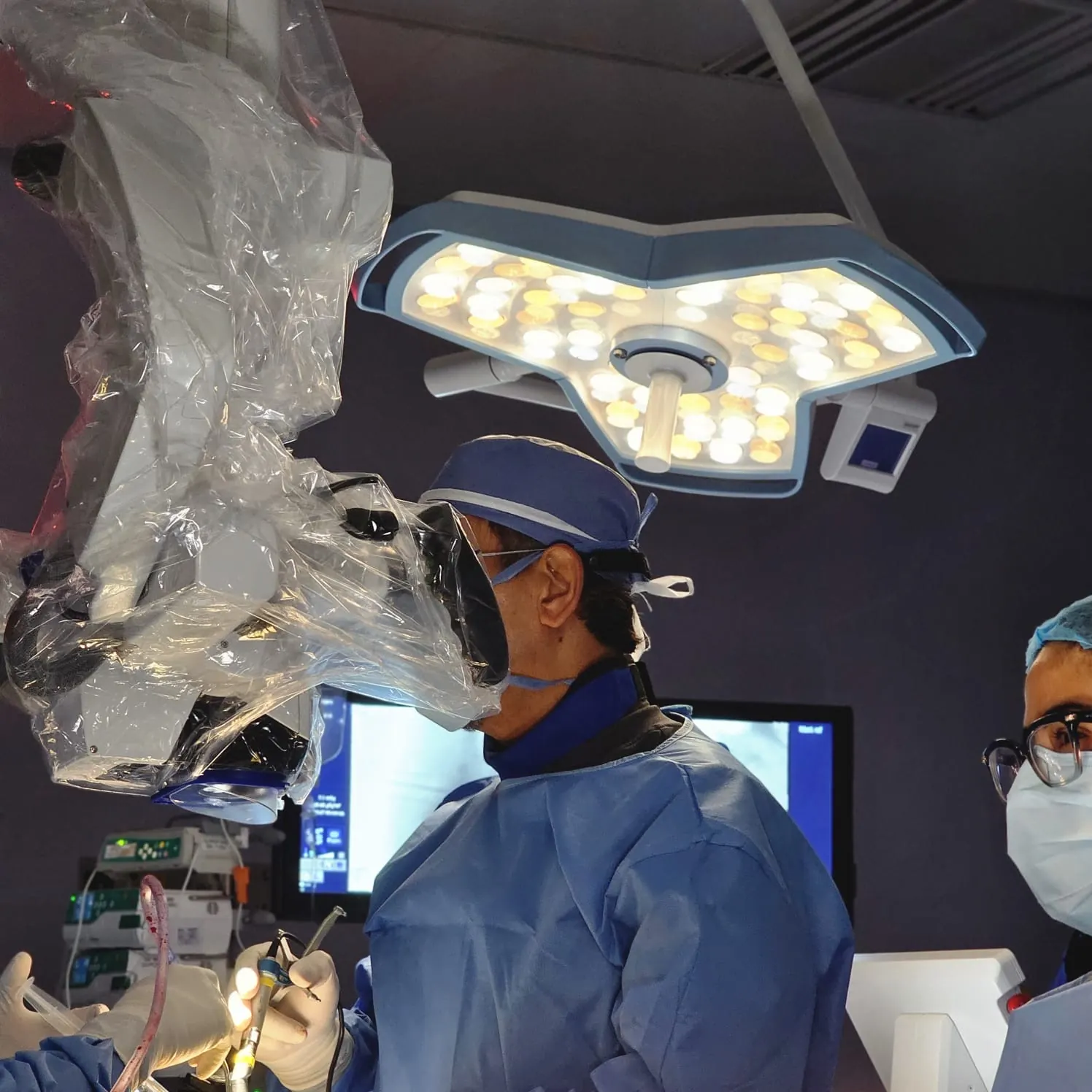
Being diagnosed with a brain tumor causes immediate fear. In the case of a meningioma, understanding what it means helps you make decisions calmly.
What is a meningioma?
It is the most common primary tumor inside the skull in adults. It grows from the meninges, the membranes that cover the brain and spinal cord, and in the vast majority of cases it is benign and slow-growing.
Is a meningioma cancer?
In most cases, no. Unlike malignant tumors, it almost never invades the brain or spreads to other parts of the body. Its main problem is that, as it grows, it can compress nearby areas of the brain, nerves or blood vessels.
What symptoms does a meningioma cause?
Many cause none and are found by chance on imaging done for another reason. When there are symptoms, they depend on where it is:
- Persistent headache.
- Weakness in an arm or a leg, if it is near the areas that control movement.
- Changes in vision, hearing or the facial muscles, if it affects cranial nerves.
- Seizures or changes in memory and personality, depending on its location.
How is it diagnosed?
With a contrast MRI, which shows its size, location and relationship to important structures. The image is almost always so characteristic that a biopsy beforehand is not needed.
Does every meningioma need surgery?
No. There are three options, chosen according to the size, the location, whether it has grown on follow-up scans, the symptoms and the patient's health:
- Observation with periodic MRIs, common for small tumors without symptoms.
- Surgery, which aims to remove it safely; if removal is complete, the outlook is very favorable and recurrence is low.
- Radiosurgery, highly focused radiation in one or a few sessions, useful for small or hard-to-reach tumors.
In summary
A meningioma does not always need immediate treatment, but it does need follow-up and a specialized evaluation. Knowing the options lets you decide with information, not out of fear.
This article is for information only and does not replace a medical visit. If you have warning signs, go to the emergency room.