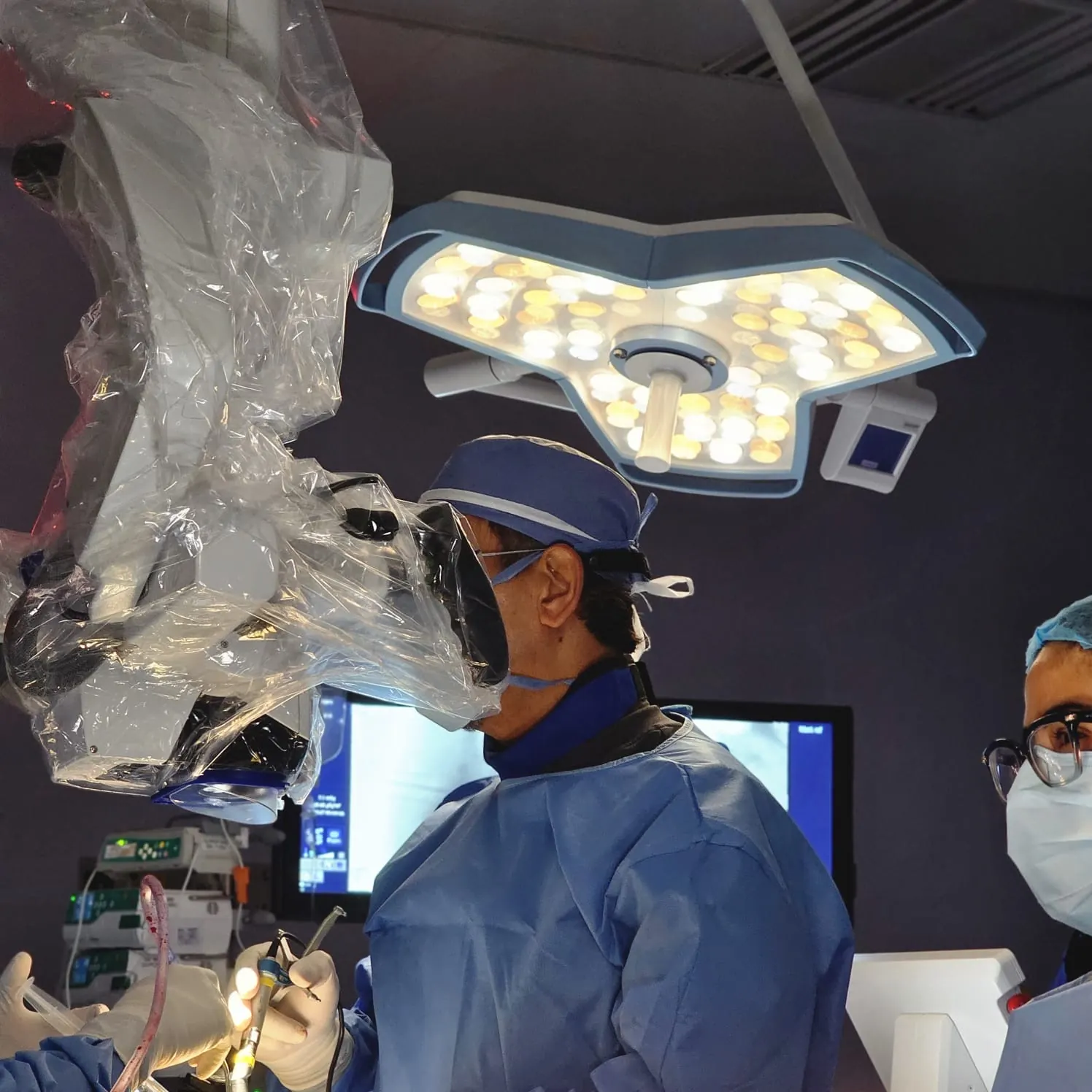
Care begins with a clinical evaluation and a review of your imaging. In selected cases, surgical treatment and follow-up are planned.
Common symptoms
- Persistent headache
- Seizures
- Changes in speech
- Weakness in the arms or legs
- Vision problems
- Changes in balance or coordination
Treatment options
From least to most invasive. The choice is made after reviewing your symptoms and your imaging.
- 1Neurological evaluation
- 2Review of MRI or CT scans
- 3Deciding the approach (monitoring, medical care or surgery)
- 4Surgical planning when indicated
- 5Support from technology and neuronavigation depending on the case
What symptoms can a brain tumor cause?
Persistent or worsening headache, seizures, changes in speech, vision or behavior, and weakness on one side of the body. Symptoms usually appear gradually. New neurological changes call for an evaluation with imaging.
Are all brain tumors malignant?
No. Meningioma, the most common brain tumor, is usually benign. Other tumors are malignant or come from cancer elsewhere in the body. The exact type is confirmed by examining the tissue, and it defines the treatment.
How is the decision to operate on a brain tumor made?
The size, location, whether it is growing, the symptoms and overall health are all considered. Some small tumors without symptoms are monitored with periodic MRIs; others need surgery to remove them or take a biopsy, sometimes combined with radiation or other treatments.
Frequently asked questions
Are all brain tumors malignant?
No. There are benign and malignant tumors. The plan depends on the type, location, symptoms and imaging.
What happens after the diagnosis on imaging?
The imaging is reviewed, matched with your symptoms, and the best plan is defined: monitoring, medical treatment or surgery if appropriate.
Is surgery always urgent?
Not always. Urgency depends on symptoms, growth and neurological involvement.
What should I bring to my visit?
Your MRI or CT scan (if you have them), reports, a list of symptoms and previous treatments.