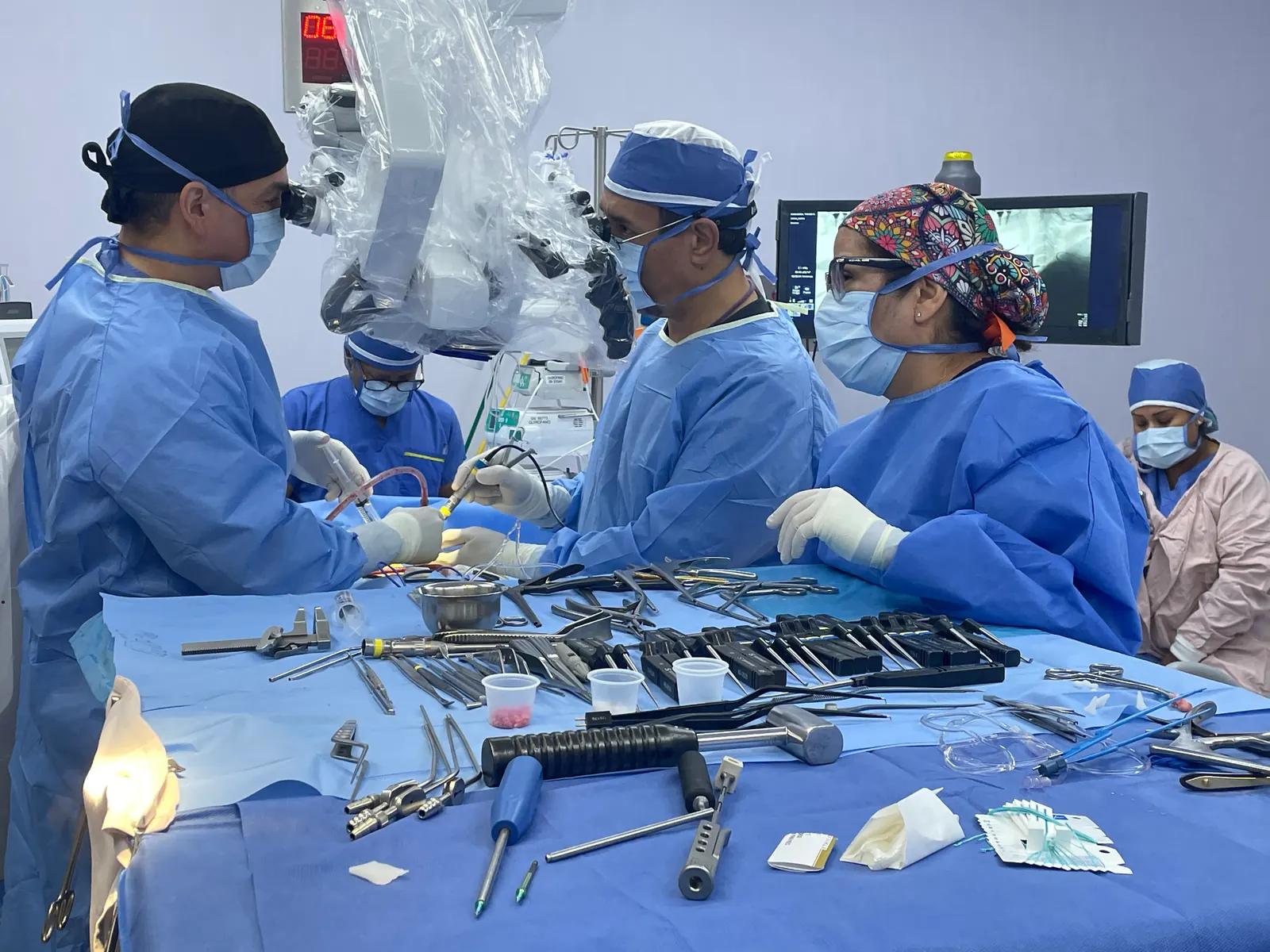
Cerebrovascular diseases can be complex. The visit focuses on evaluating symptoms, risks and imaging to guide the best treatment plan.
Common symptoms
- Severe or unusual headache
- Sudden neurological symptoms (weakness, speech, vision)
- Seizures
- Dizziness or balance problems
Treatment options
From least to most invasive. The choice is made after reviewing your symptoms and your imaging.
- 1Neurological evaluation and review of imaging
- 2Guidance on risks and treatment options
- 3Follow-up and planning according to the diagnosis
What is a brain aneurysm?
It is a bulge in the wall of an artery in the brain, like a small balloon. Most cause no symptoms and are found on imaging done for another reason. The main risk is that it ruptures and causes bleeding, which is a medical emergency.
What symptoms mean an aneurysm has ruptured?
A sudden, very intense headache, described as the worst of one's life, sometimes with vomiting, a stiff neck, loss of consciousness or seizures. With these symptoms, go to the emergency room immediately.
Do all aneurysms need surgery?
No. Size, shape, location, age and risk factors such as high blood pressure or smoking are evaluated. Some are monitored with periodic imaging and blood pressure control; others are treated with surgery or endovascular procedures.
Frequently asked questions
What is a brain aneurysm?
It is a dilation of a blood vessel in the brain. Treatment depends on its size, location and risk.
What is an AVM?
An arteriovenous malformation: an abnormal connection between arteries and veins. It is evaluated with imaging and symptoms.
Which studies are used to confirm it?
It depends on the case: CT, MRI and vascular studies ordered by the specialist.
When should I go to the emergency room?
With an explosive headache, sudden neurological symptoms or loss of consciousness.