Trigeminal neuralgia causes a characteristic facial pain. The evaluation rules out other causes and defines treatment.
Common symptoms
- Severe facial pain like an electric shock
- Brief but repeated episodes
- Pain triggered by talking, chewing or touching the face
- Pain on one side of the face
- Interference with daily activities
Treatment options
From least to most invasive. The choice is made after reviewing your symptoms and your imaging.
- 1Neurological evaluation
- 2Review or ordering of imaging depending on the case
- 3Specialized medical treatment
- 4Procedures or surgery when indicated
What is trigeminal neuralgia?
It is a very intense facial pain, like electric shocks, that lasts seconds and comes in repeated episodes. It affects one side of the face and can be triggered by talking, chewing, brushing your teeth or touching certain areas of the face.
How is trigeminal neuralgia treated?
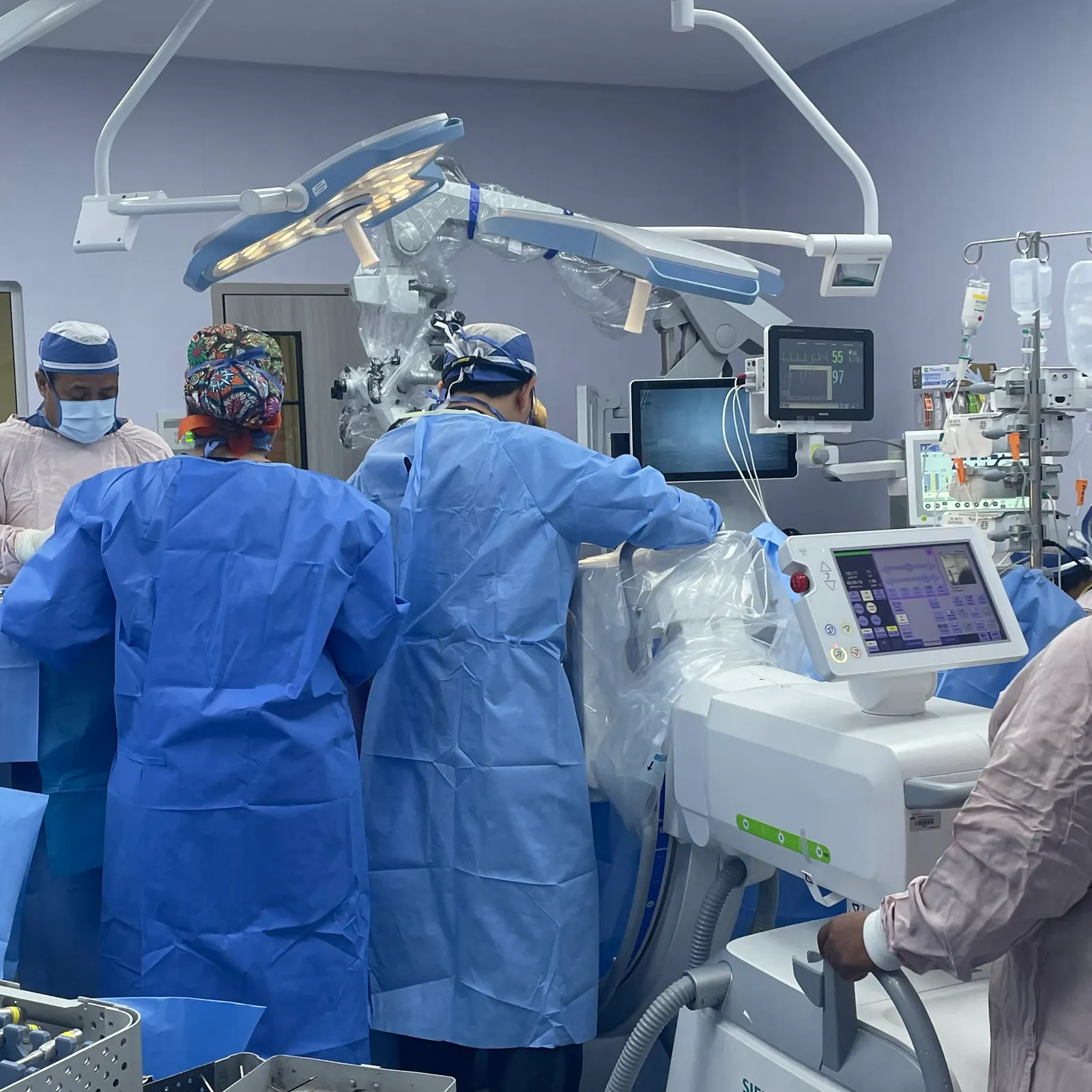
The first step is specific medications that control the pain in many patients. When they stop working or cause significant side effects, there are surgical options, such as microvascular decompression or percutaneous procedures, chosen according to each case.
Which study is needed?
A brain MRI with a protocol for the trigeminal nerve, which rules out other causes and shows whether an artery is touching the nerve. This information helps decide whether surgery is a good option.
Frequently asked questions
How do I know if it is trigeminal neuralgia?
From the pattern of the pain and the clinical evaluation. In some cases imaging is ordered to rule out other causes.
Can it be treated without surgery?
Yes. In many cases it is controlled with medication. Surgery or a procedure is considered if there is no response.
What triggers it?
It can be set off by light stimuli such as touching the face, talking or eating.
Is it dangerous?
It is not usually life-threatening, but it can greatly affect quality of life. It needs proper treatment.