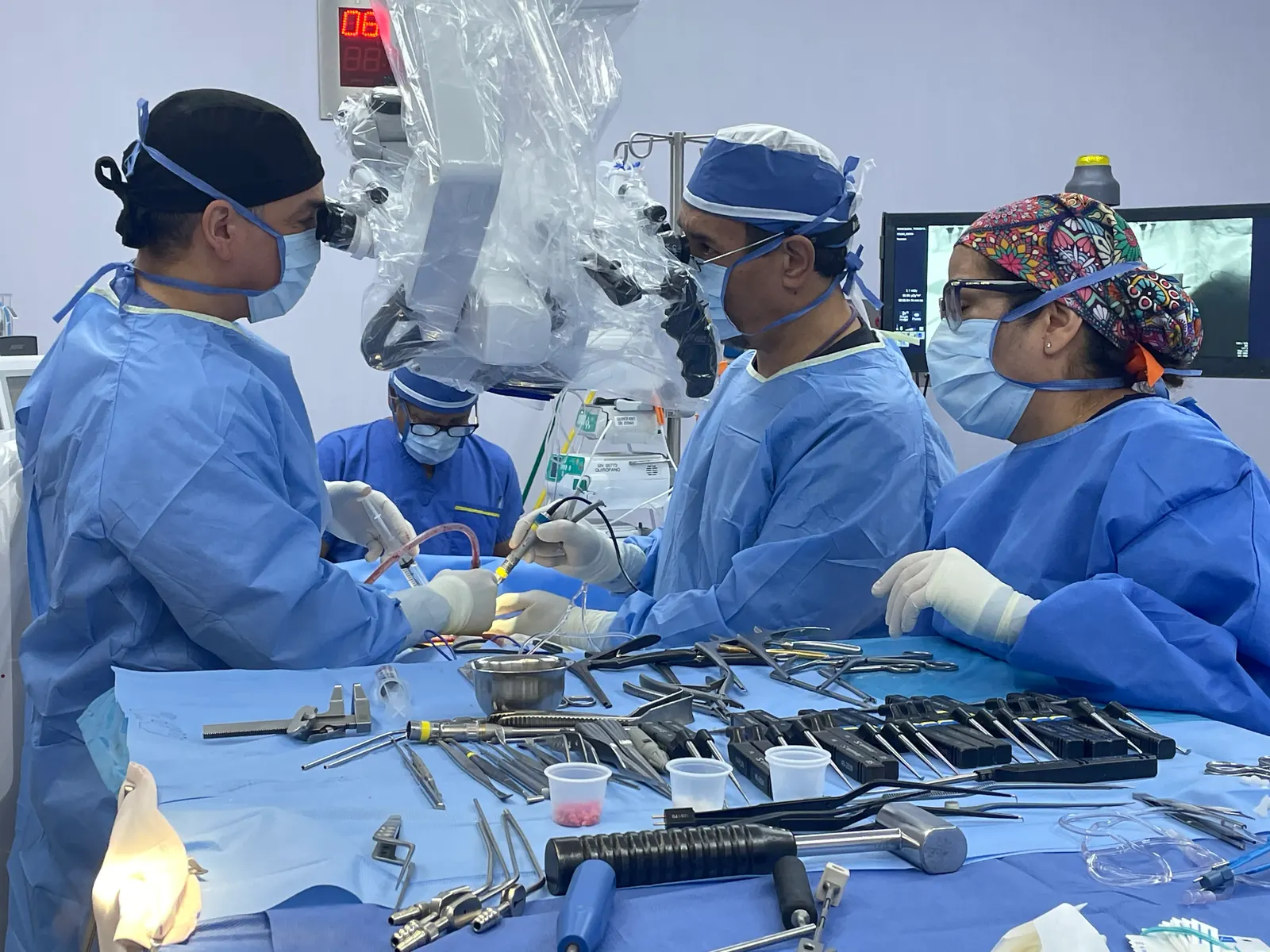
A herniated disc can press on nerves and cause pain, numbness or weakness. Treatment depends on your symptoms, how long you have had them and your imaging.
Common symptoms
- Neck or back pain
- Pain running down the arm or leg (sciatica)
- Tingling or numbness
- Muscle weakness
- Pain that limits daily activities
Treatment options
From least to most invasive. The choice is made after reviewing your symptoms and your imaging.
- 1Clinical and neurological evaluation
- 2Review or ordering of an MRI
- 3Conservative care and rehabilitation
- 4Nerve blocks or injections when indicated
- 5Surgery when there is a neurological deficit or pain that does not improve
What is a herniated disc?
It is when part of the disc that cushions two vertebrae moves out of place. That material can press on a nerve and cause pain that runs down the arm or leg, tingling or weakness. It is most common in the lower back and the neck.
When does a herniated disc need surgery?
Surgery is considered when there is progressive loss of strength, loss of bladder or bowel control, or pain that does not improve after six to twelve weeks of proper treatment. Most patients improve without surgery, with relative rest, medication, rehabilitation and sometimes injections.
What is recovery like after herniated disc surgery?
With minimally invasive techniques, many patients walk the same day and return to light activities in two to four weeks. Returning to physical work depends on the type of job and on rehabilitation. Follow-up with the neurosurgeon lets the timing be adjusted to each case.
What imaging should I bring to my visit?
An MRI is the most useful study to see the disc and the nerves. If you already have X-rays, a CT scan or an earlier MRI, bring them even if they are old: comparing studies shows whether the herniation has changed and avoids repeating unnecessary tests.
Frequently asked questions
Does every herniated disc need surgery?
No. Many improve with conservative care. Surgery is done when there is loss of strength, severe compression or persistent pain despite treatment.
Which study is the most useful?
An MRI is usually the main study to evaluate discs and nerves.
How long does it take to improve?
It depends on the case. Some improve within weeks of treatment; if there is a neurological deficit, the evaluation should be immediate.
Is sciatica always caused by a herniated disc?
Not always. It can be caused by stenosis, inflammation or other conditions. It is confirmed with an exam and imaging.