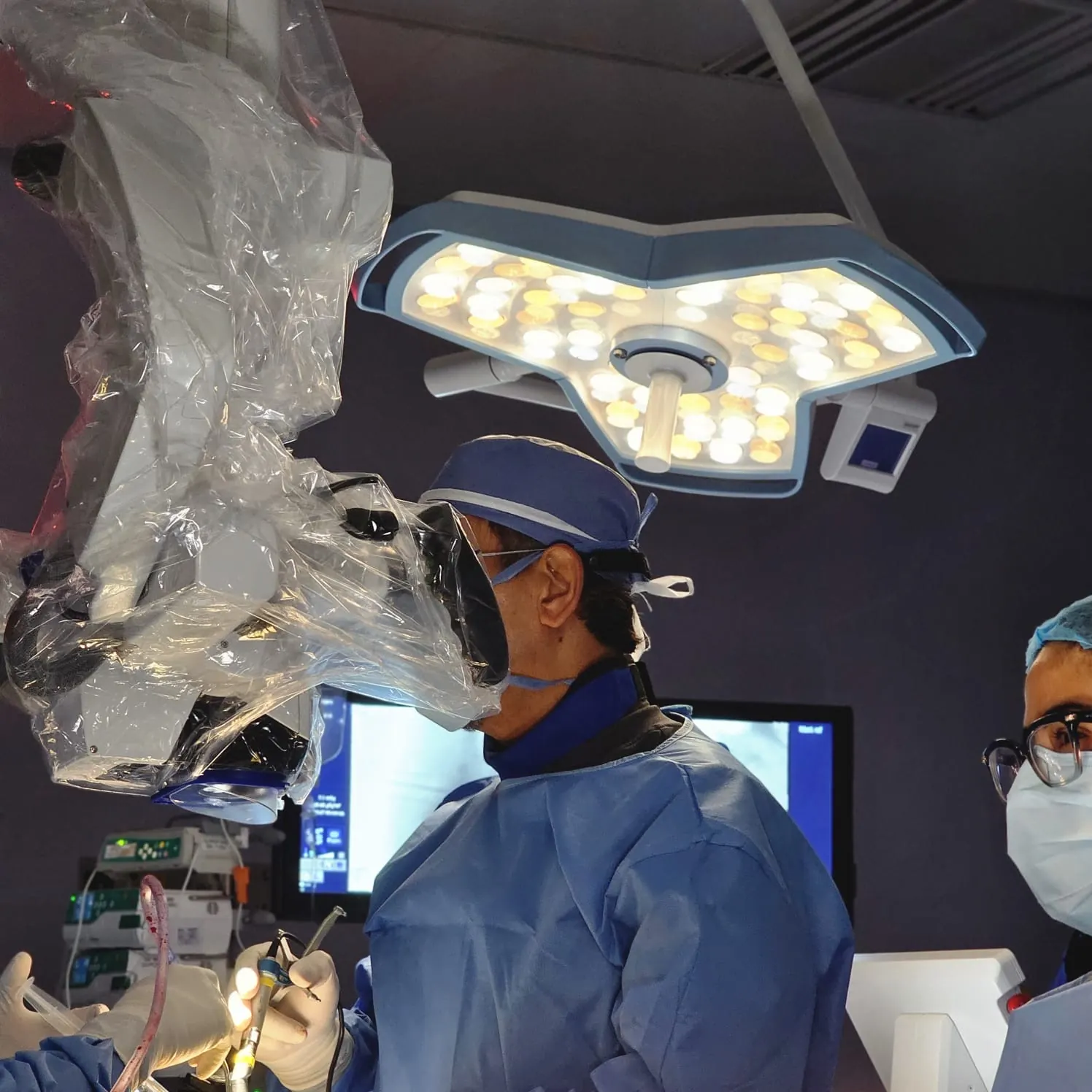
Specialized care for diseases that affect the brain and nervous system. The evaluation includes a neurological exam and a review of your imaging (MRI, CT or others) to define the best plan: conservative care, monitoring or surgery when it is indicated.
Common symptoms
- Persistent or worsening headache
- Seizures
- Difficulty speaking or pronouncing words
- Weakness in the arms or legs
- Changes in coordination or balance
- Vision problems
- Recent neurological changes
Treatment options
From least to most invasive. The choice is made after reviewing your symptoms and your imaging.
- 1Complete neurological evaluation
- 2Review or ordering of imaging (MRI, CT, etc.)
- 3Medical care and follow-up when appropriate
- 4Surgical plan when indicated
- 5Technology and neuronavigation when required
Which brain conditions does a neurosurgeon treat?
Brain tumors, aneurysms and vascular malformations, hydrocephalus, bleeding after head injuries, trigeminal neuralgia and some forms of epilepsy that do not respond to medication. The neurosurgeon evaluates whether treatment should be surgical or whether another option is better.
When does a headache need an evaluation?
When it is sudden and very intense, changes pattern, gets worse over time, wakes you at night, or comes with vomiting, seizures, vision changes or weakness. A sudden, severe headache is an emergency and needs immediate care.
Is brain surgery very risky?
Every procedure has risks, but today's microsurgery and neuronavigation techniques make it possible to operate with greater precision. The risk depends on the disease, its location and the patient's overall health. Risks, benefits and alternatives are explained in the visit before deciding.
Frequently asked questions
Does brain neurosurgery always mean an operation?
No. Many conditions are managed with monitoring or medical treatment. Surgery is indicated based on the diagnosis, symptoms, imaging and the balance of risks and benefits.
What studies do I need for a first evaluation?
Ideally an MRI or CT scan, plus earlier reports if you have them. If you do not have them, they are ordered according to your case.
What is neuronavigation?
It is a technology that helps locate structures precisely during procedures, improving planning and safety depending on the case.
When should I go to the emergency room?
If there is sudden loss of strength, new seizures, marked confusion, an explosive headache or rapid neurological decline.